
The Moat
The Moat: a medieval manor site at the heart of Kings Moat
Beside Wrexham Road lies a moated site hundreds of years old. A grassy platform, about 63m by 47m, sits inside a dry ditch roughly 15m wide and up to 1.5m deep. There's a likely entrance causeway on the south-east side.
Who lived here?
Nobody is certain. The moat is thought to mark the manor house of Marlston, one of two small manors in this area recorded at the time of Domesday. Later records suggest the manor belonged to St Mary's nunnery in Chester until the Dissolution, then passed to local landowning families. The house itself seems to have vanished early. It doesn't appear as an occupied building on early maps, and the land was later ploughed.
What may still lie beneath
A geophysical survey in 2015 picked up the moat ditch, along with shapes inside it that may be the remains of buried buildings. In 2019, archaeologists working on land just to the south-east, on the west side of Wrexham Road, found a small amount of medieval pottery and a glazed floor tile. Those finds may point to a high-status building nearby.
Why build a moat?
They weren't always for defence. A moat was often a sign of wealth and prestige as much as a barrier. There are around 6,000 moated sites in England and over 200 in Cheshire.
Protected for the future
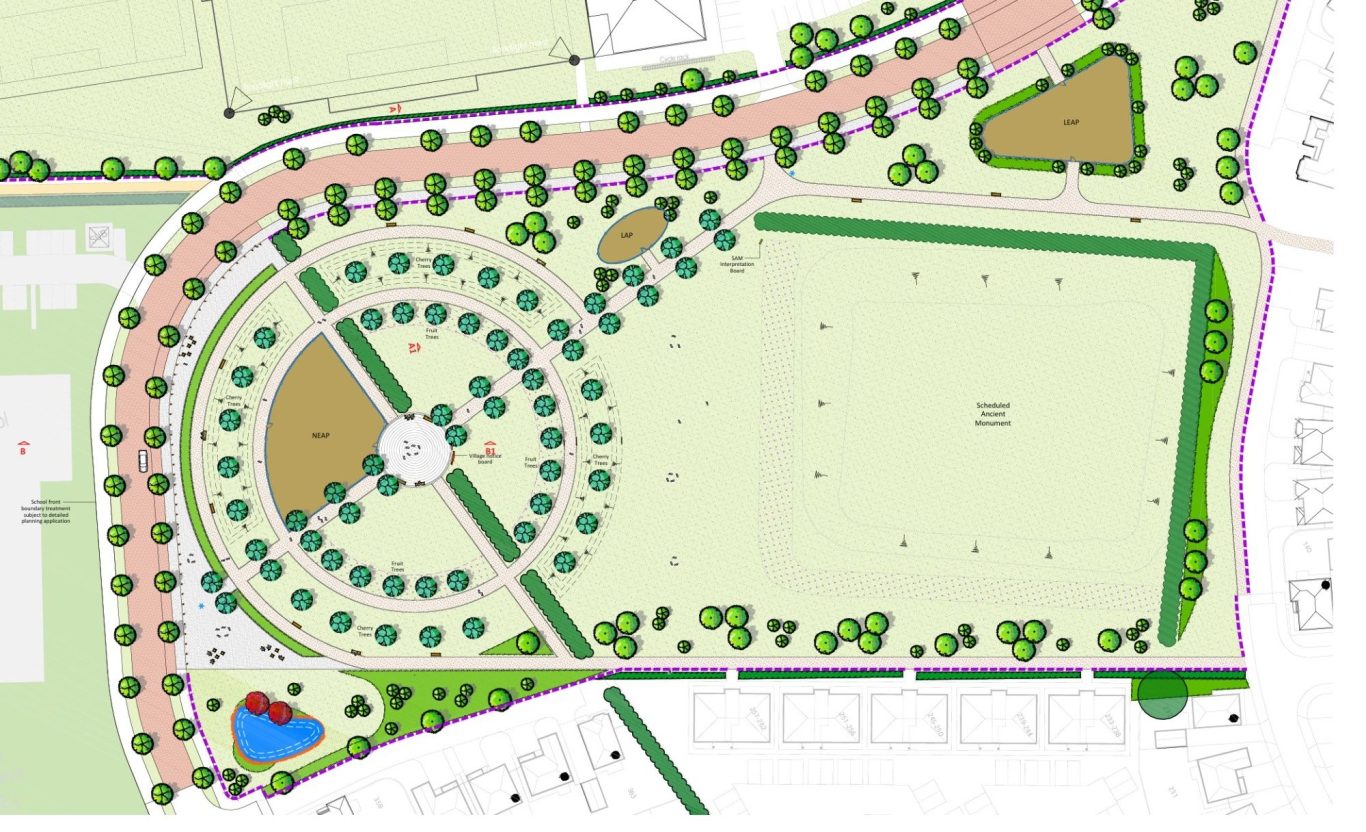
The moat is a scheduled monument (Historic England list entry 1011882), which means it's recognised as nationally important and any works to it need special consent. A 2017 heritage assessment for the surrounding housing considered it appropriate to set aside an area around the moat to safeguard the earthworks and anything buried beneath.
Visiting the moat
Close to Moat Lane play park. Please keep to the paths
Sources: Cheshire Historic Environment Record (HER 1973 / MCH1407) and Historic England.
Tucked into the heart of Kings Moat is something far older than the homes around it: a medieval moated site, protected by law as a scheduled monument. Thought to be where the manor house of Marlston once stood, now protected as a scheduled monument.
Moats like this weren’t usually built to keep enemies out. Most surrounded the home of a wealthy landowner, and the water-filled ditch was more a status symbol than a fortress. Around 6,000 moated sites are known in England, and many were built between about 1250 and 1350.
“Scheduled” means the site has been recognised as nationally important, so it’s protected and any work on it needs special consent. The ground can still hold clues about how people lived here centuries ago, which is why it’s best left undisturbed.